
There's a conversation that happens in my office so often I could set my watch by it.
One partner says, "We never have sex anymore." The other says, "We never talk anymore." And then they both look at me like they've just described two different problems.
They haven't. They've described one problem from two ends.
I want to spend this post on something I believe is the single most misunderstood dynamic in couples' sexual lives: for most long-term relationships, emotional intimacy is the on-ramp to physical intimacy. Not a nice bonus. Not a separate department. The on-ramp. And when couples try to get on the highway without it, the engine stalls — and both people end up blaming themselves, or each other.
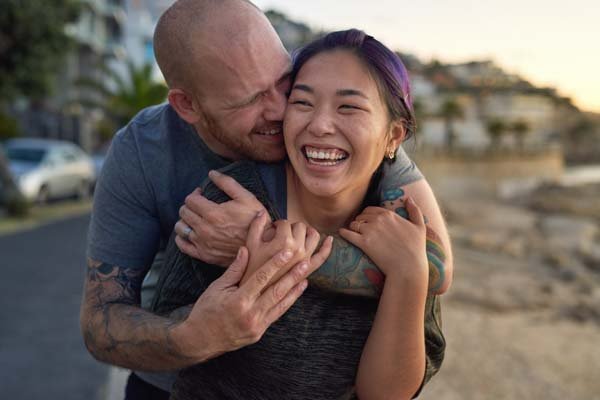
Two Ends of the Same Bridge
Let me describe the couple I see most often.
One partner — I'll call him Dan, though I've met a hundred Dans of every gender — feels closest through physical connection. Sex, for Dan, isn't just pleasure. It's reassurance. It's the place where he feels wanted, chosen, at ease. When it's been a while, he doesn't just miss sex. He starts to feel unloved, and he doesn't have good words for that, so it comes out as irritability or pouting or pressure.
His wife — call her Priya — feels closest through emotional connection. Real conversation. Feeling known. Being asked how she actually is, and having someone stick around for the honest answer. When that's been missing, her body simply doesn't warm toward Dan. It's not a decision. It's not punishment. Desire, for her, grows out of feeling close — and lately she doesn't.
So Priya is waiting to feel connected before she wants sex. And Dan is waiting for sex to feel connected. Each of them is standing at their own end of the bridge, waiting for the other to cross first.
Neither of them is wrong about what they need. But somebody has to start walking.
Why Skipping the On-Ramp Backfires
Here's what usually happens instead. Dan, feeling the distance, pushes for more sex — because that's his route back to closeness. But to Priya, sexual pressure without emotional connection feels like being asked to give the fruit of a tree nobody's watering. So she pulls back further. Dan reads her pulling back as rejection and either pushes harder or goes cold. Around and around they go.
If you've read my work before, you'll recognize this shape. It's the pursue-withdraw cycle, wearing its sexual costume. I've written about how this dance works underneath ordinary fights here — and everything in that post applies doubly in the bedroom, because the stakes feel higher and the vulnerability is greater.
I want to name what's underneath each position, because this is where the compassion comes in.
Underneath Dan's pushing is not entitlement — at least, not usually. It's a question he can't bring himself to ask out loud: Do you still want me? Anger is usually the bodyguard for something softer underneath, and Dan's irritation is guarding a tender fear of being unwanted by the person he's built his life around.
Underneath Priya's distance is not coldness. It's loneliness. You want my body, but do you want me? Her lack of desire is her body keeping an honest ledger of the emotional account. The desire isn't dead. It's waiting for conditions it can trust.
Both of these people are hurting about the same thing: they miss each other. They're just missing each other in different languages.

What Emotional Intimacy Actually Does to Desire
In Emotionally Focused Therapy, we talk about the qualities that make a bond feel secure — being accessible, responsive, and engaged. I've written before about that A.R.E. framework here.
Here's what I want you to understand: those same qualities are quietly running your sex life.
Desire — especially responsive desire, the kind that grows in the presence of the right conditions rather than showing up on its own — is profoundly sensitive to felt safety. When you feel that your partner sees you, that they'd respond if you reached for them, that they're actually with you at dinner and not just across from you, your nervous system files them under safe and close. Attraction has room to breathe there.
But when the emotional account runs empty — when conversations have shrunk to logistics, when bids for attention get half-answers over a phone screen — the body files its own report. And you cannot argue a body out of its report. You can only change what it's reporting on.
I want to be careful here, because this is a place where one partner sometimes weaponizes the idea. "Emotional intimacy first" is a description of how desire tends to work — it is not a bargaining chip, and it's not a purity test the higher-desire partner has to pass before being allowed to want anything. I've seen the concept curdle into a moving goalpost: he does the dishes, plans the date, asks the questions, and the verdict is always "it doesn't feel connected enough yet." If that's happening, the connection problem has become a power problem, and that's a different conversation — one worth having honestly, maybe with help. The on-ramp only works when both people actually want to get on the highway.
This is why the advice to "spice things up" so often lands flat. A new location or new lingerie is accelerator. Emotional distance is brake. And as I've written before, no amount of accelerator overcomes a pressed brake.
Crossing the Bridge From Both Ends
So what do Dan and Priya actually do? Both of them start walking. Here's what that looks like, and I want to give each of them credit first — Dan has been trying, in his language. Priya has been trying, in hers. The work is not to try harder. It's to try in the other person's language.
For the partner in Dan's position: your assignment is emotional generosity with no agenda. And I mean no agenda — your partner will smell a transaction a mile away, and a transaction just adds pressure. Ask her something real and stay for the answer. Put your phone in the other room. Tell her one thing you're actually worried about, one soft thing, because emotional intimacy isn't just listening to her feelings — it's letting her see yours. Micro-moves, done repeatedly, are what fill the account. The candlelit grand gesture matters less than two hundred small moments of turning toward her.
And here's the hard part: keep doing it when it doesn't immediately "work." If three good evenings don't lead anywhere physical, and you go cold in response, you've just confirmed her fear that the connection was bait. The tree waters slowly.
For the partner in Priya's position: your assignment is to stop waiting for the feeling to arrive before you move toward him at all. I'm not talking about having sex you don't want — I will never tell you that. I'm talking about not letting the physical channel close completely while the emotional account refills. Touch him on purpose. Kiss him longer than a peck. Tell him the true, soft thing: "I miss you too. I want to want you again. Connection is how I get there — help me get there." That sentence gives him a map, where silence just gives him rejection to interpret.
And when he makes his clumsy attempts at emotional connection — and they may be clumsy — let him know they're appreciated. A person who feels their efforts landing will make more of them. A person who feels their efforts graded will stop.

The Order of Operations
If you take one thing from this post, let it be this: in long-term love, emotional intimacy usually comes first in the order of operations. Not because emotional needs are more legitimate than physical ones — they aren't — but because that's how the wiring tends to run. Connection opens the road. Desire drives on it.
Next week I'll write about what happens when this wiring gets misread — when "no sex" gets heard as "I'm not loved," and the stories couples write about each other in that silence.
For now, start with one evening. Phones away, one real question, no agenda. You're not trying to get anywhere tonight. You're building the on-ramp.
And if you need a place to start, here are questions that work better than "how was your day": What's been weighing on you lately that you haven't said out loud? What's something you're looking forward to? When did you feel closest to me this past year? None of these are magic. What's magic is staying for the answer — putting down the fork, holding eye contact, asking the follow-up question instead of pivoting to your own story. Being listened to like that is, for many people, the most erotic thing that will happen to them all month. They just wouldn't use that word for it.
If the two of you have been stuck at opposite ends of this bridge for a while, I'd love to help. You can schedule a free video consultation.