
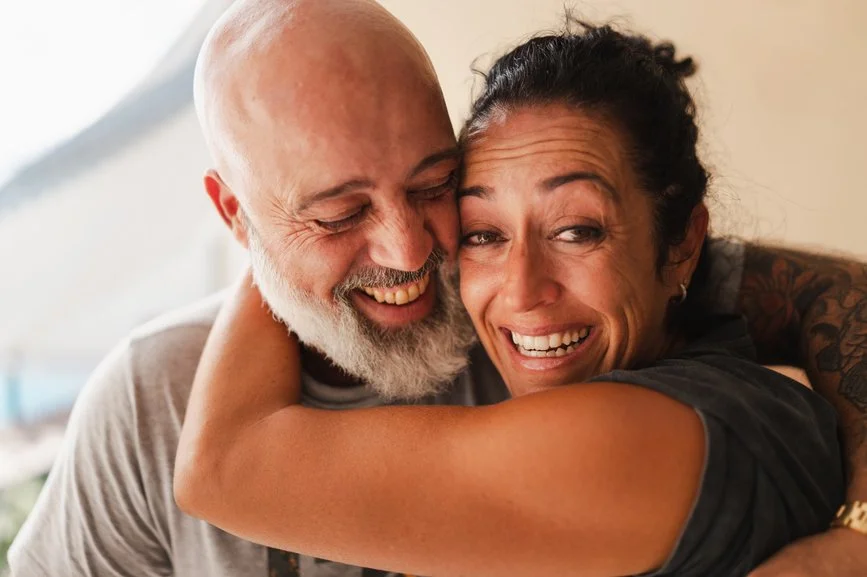
Your partner wants to know where you are. They text when you're out with friends. They ask if everything's okay when you've been quiet. They want more time together, more reassurance, more closeness. They notice when you're distant—and they say something about it.
Maybe you find this sweet. Maybe you find it suffocating. Maybe it depends on the day.
If you've ever thought of your partner as "clingy" or "needy," I want to offer a different frame. Because what looks like clinginess from the outside is usually something else entirely from the inside. And understanding what's really happening can change how you respond to it.
What "Clingy" Usually Looks Like
Before we reframe it, let's name it. Here's what people usually mean when they say their partner is clingy:
Frequent check-ins. Texting throughout the day. Wanting to know your schedule. Asking "where are you?" or "when will you be home?"
Seeking reassurance. "Do you still love me?" "Are we okay?" "You're not mad at me, are you?" Questions that seem to have obvious answers but keep getting asked.
Difficulty with separateness. Discomfort when you spend time apart. Wanting to be included in everything. Feeling hurt when you make plans without them.
Sensitivity to distance. Noticing when you're distracted, withdrawn, or less affectionate than usual—and reacting to it. Sometimes with questions. Sometimes with hurt. Sometimes with frustration.
Protest behaviors. When the need for closeness isn't met, it can come out sideways—picking fights, making critical comments, withdrawing themselves to see if you'll notice.
From the outside, this can feel like pressure. Like surveillance. Like you can't breathe.
But here's what I want you to understand: your partner isn't trying to control you. They're trying to find you.
The Attachment System at Work
Clinginess isn't a personality flaw. It's the attachment system doing its job.
We're wired for connection. When we're in a relationship, our nervous system tracks our partner the way a child's nervous system tracks their caregiver. Are they available? Are they responsive? Are they close?
When the answer is yes, we feel secure. We can relax. We can go about our day without anxiety because we know our person is there.
When the answer is uncertain—when our partner seems distant, distracted, or disconnected—our attachment system activates. It sends an alarm: Something's wrong. Find them. Get close. Restore the bond.
This isn't conscious. It's not a choice. It's biology.
For some people, this alarm is louder than for others. Maybe they learned early in life that connection was unreliable. Maybe they've been hurt before—abandoned, betrayed, left. Their system is calibrated for threat, so it picks up on smaller signals and reacts more intensely.
What looks like clinginess is often an activated attachment system trying to answer one question: Are you still there?
What Your Partner Is Actually Feeling

If your partner is the "clingy" one, here's what's probably happening inside them:
Fear. Not dramatic, conscious fear—but a low hum of anxiety. Something feels off. You seem distant. They don't know why, and their nervous system is filling in the blanks with worst-case scenarios.
Loneliness. They miss you. Even if you're in the same room, they can feel the gap. They're reaching for connection, not control.
Self-doubt. "Am I too much? Am I doing something wrong? Why does it seem like they'd rather be somewhere else?" The clinginess often comes with a harsh inner critic telling them they're the problem.
Love. This is the part that's easy to forget. Your partner wants to be close to you because they love you. The reaching, the checking, the reassurance-seeking—it's all in service of a bond that matters to them deeply.
Clinginess isn't the opposite of love. It's often the anxious expression of it.
What You Experience as the Other Partner
If you're on the receiving end of clingy behavior, your experience is real too.
Pressure. It can feel like nothing you do is enough. No amount of reassurance satisfies. No amount of closeness fills the need.
Guilt. You love your partner, but you also need space. And needing space makes you feel like you're failing them.
Irritation. The questions get repetitive. The checking-in feels like monitoring. You start to pull away—not because you don't care, but because you're overwhelmed.
Confusion. You've told them you love them. You're here. Why isn't that enough? What more do they want?
Here's the hard part: your pulling away often makes their clinginess worse. And their clinginess often makes you pull away more. This is the pursue-withdraw cycle, and it can spin until both of you are exhausted.
The Cycle Underneath
This is worth naming clearly:
Partner A feels disconnected, anxious, unsure of the bond. They reach out—texts, questions, bids for closeness.
Partner B feels pressured, overwhelmed, maybe a little smothered. They pull back—shorter responses, more time alone, emotional distance.
Partner A senses the pullback. Their anxiety increases. They reach out more.
Partner B feels more pressure. They pull back more.
And around it goes.
Neither partner is the bad guy. Partner A isn't too needy. Partner B isn't too cold. They're both caught in a pattern that's bigger than either of them.
The way out isn't for Partner A to stop having needs or for Partner B to give up their need for space. The way out is for both partners to see the cycle—and start working against it together.
What Actually Helps: For the "Clingy" Partner

If you recognize yourself as the one who reaches, seeks, and worries about the bond, here's what can help:
Name what you're feeling, not just what you need. Instead of "Why haven't you texted me back?" try "I noticed you've been quiet and I'm feeling a little anxious. Can you let me know we're okay?" This is vulnerable, but it's also clearer. You're sharing what's underneath, not just making a demand.
Recognize the alarm for what it is. When your anxiety spikes, pause before you act on it. Ask yourself: Is something actually wrong, or is my attachment system activated? Sometimes just naming it—"This is my fear, not reality"—can turn down the volume.
Soothe yourself first. Your partner can't be your only source of regulation. Build your own capacity to calm your nervous system—through friends, movement, grounding practices, whatever works. Not because your partner shouldn't comfort you, but because you're more resourced when you can comfort yourself too.
Trust the reassurance you get. If your partner tells you they love you, try to let it land. Let it count. Reassurance doesn't work if you dismiss it the moment you receive it.
Watch for protest behaviors. If you find yourself picking fights or withdrawing to get a reaction, pause. That's your attachment system trying a different strategy—and it usually backfires. Name what you need directly instead.
What Actually Helps: For the Partner Who Pulls Back
If you're the one who feels overwhelmed by your partner's need for closeness:
Don't pathologize their needs. "Clingy" is a judgment. It frames your partner's attachment as a problem. Try replacing it with: "My partner needs more reassurance than I do." Different, not defective.
Reach out before they have to ask. A proactive text, a spontaneous "I love you," an unsolicited hug—these small moves go a long way. When your partner doesn't have to chase you, their anxiety settles. And when their anxiety settles, the clinginess eases.
Be honest about your needs. If you need space, say so—but say it warmly. "I need an hour to decompress after work, and then I'm all yours" is very different from disappearing without explanation.
Reassure without resentment. Yes, you've told them you love them before. Yes, it can feel repetitive. But reassurance isn't a one-time deposit. It's ongoing maintenance. Your partner isn't broken for needing it.
See the fear underneath. When your partner asks "Are we okay?" for the tenth time, try to hear the vulnerability beneath it. They're not trying to annoy you. They're scared of losing you. That fear is a compliment, even when it's exhausting.
The Goal Isn't to Eliminate Needs
Some people read about attachment and think the goal is to become "securely attached" in a way that means never needing reassurance, never feeling anxious, never wanting closeness.
That's not how it works.
We all have attachment needs. We all want to feel chosen, wanted, secure in our bond. The goal isn't to eliminate those needs—it's to express them in ways that bring you closer instead of pushing you apart.
And it's to build a relationship where those needs can be met. A relationship where one partner can say "I need closeness" and the other can say "I need space"—and both people can stretch toward each other without losing themselves.
That takes work. It takes communication. It takes both people being willing to see their partner's needs as valid, even when they're different from their own.
Clinginess as Information
Here's the reframe I want to leave you with:
Clinginess isn't a flaw to be fixed. It's information about what your partner needs.
It tells you that connection matters to them. That they're tracking the relationship closely. That when something feels off, they notice—and they reach for you instead of pulling away.
That's not weakness. That's attachment. That's love, showing up in an anxious costume.
The question isn't how to make your partner less clingy. The question is how to help them feel secure enough that the clinginess relaxes on its own.
And that's something you build together.
If the pursue-withdraw cycle has taken hold in your relationship and you're struggling to break it, couples therapy can help. Schedule a free consultation to talk about what's happening and whether working together might be a good fit.