

Marriage Counseling

Cooling Off Takes Work

Couples counseling edina minneapolis minnesota Loving Indian couple

When I work with couples, cooling off is part of a recommended strategy to have a nuanced conversation. I propose to people that they should use a method to give feedback, but cool off if they are getting heated. The method of feedback goes something like this: Let your partner know that you’re overwhelmed and that it’s hard to hear them. It can go something like this:

“I want to hear you out right now, but I’m so [overwhelmed/heated/irritated] that I am finding it difficult to hear you, and I want to hear you. Can we check in again in 2 hours?”

This allows you to cool off so you can actually have a more nuanced conversation. If you’re feeling flooded/overwhelmed/agitated, you’re likely entering into a fight/flight/freeze mode. If that happens, you’re likely not going to have a conversation. You’re likely going to fight. But the other half that I tell clients they have to do is actually check in at the appointed time. Otherwise, you’re only training your spouse or partner that they can’t trust you. I have an article on how slowing down actually improves productivity of conversations.

Couples counseling edina minneapolis minnesota cooling down thinking man

Now Cool Off

Cooling off should be simple, right? You just have to get away from that person that was irritating you so much. They didn’t leave you alone. They called you names. They were unfair. They just kept nagging. . . Except thinking about all of these things while you’re trying to “cool off” isn’t cooling off. Have you ever had the experience of being so caught up in a loop in your head that you end up angrier than when you first started thinking about something?

First Take a Deep (square) Breath

This might sound trite, but it actually works. I helped my wife in labor with a combination of square breathing and guided imagery. Square breathing is like normal breathing, except you breathe in as deeply as you can, then hold that breath for 4 seconds. Then exhale and hold that exhale for 4 seconds. Then repeat. I’ve gone more in depth on it in my article on Square Breathing and Calming Down.

Deep breathing stimulates your parasympathetic nervous system. It’s a fancy name for the part of the nervous system that calms you. As you do this breathing, notice how you’re breathing. That might sound crazy - “I’m just breathing, right?” Well, notice how the air is going in and out. Notice how your nostrils flair at different parts of your breath. Congratulations. You’re now meditating.

Now Break Your Thought Loop

Couples counseling edina minneapolis minnesota apologizing Hedgehog

Your thought loop may not be serving you. If you were in a fight, then you’re probably thinking of how the other person is doing things wrong. If what you want to do is cool down, this may not be the right approach. I want to be clear here - I’m not saying you weren’t treated poorly. I’m not saying the other person is right. I’m just saying: If you want to calm down, this isn’t the place to go.

If you’ve done the square breathing, keep doing it. Gently remind yourself to come back to it when it comes back into your attention. Now think of a place you’ve always found safe, restorative, and relaxing. Is it a beach in Hawaii? Is it a particular place in time, like a Christmas celebration when you were 8? Settled on a place or time?

Good. Now imagine that you’re walking into that space. It’s your safe space, your place that gives you comfort and security. Notice the temperature of the air. notice the smell. Are there any noises in the surroundings? Are there people? Do you hear birds? Now walk to a part of your safe space that feels especially nice/safe/comforting. Where is it? Linger for a while. What are you doing that feels restorative? are you lying down? Are you reading? Are you sipping a drink?

Now slowly bring your attention back to the present. Are you taking a walk? Are you in a room? If you’ve closed your eyes, slowly open them. Notice your heartbeat.

If you feel calmer, then that’s good. That’s the work it takes to get you in a calmer state. Once you’re calmer, you can have a difficult conversation without attacking your partner. Here is an article I wrote about the next step - actually giving feedback without fighting. It actually takes a page from Terry Real, who has written some great books on couples.

Now You’re Calm: Time To Get To Work

But the biggest mistake is to think that just leaving the situation is going to give you a different outcome. You actually have to work at it. Does that surprise you? Has anything really of value landed on your lap without work? Only if you’ve won some kind of lottery, whether it’s genetic, or intergenerational wealth passed down, or pure chance. Don’t leave your relationship to pure chance.

If you want to know more about how I think of couples and relationships, come visit my couples and marriage counseling page. If you are in Minnesota, I’m here to help. Contact me, let’s talk, and let’s get you both on the same page again. You can call at 612.230.7171, email me through my contact page, or click on the orange button to self-schedule a free, 15-minute phone call.

Don't Let Stress Drive You Apart

Stress is a normal part of any relationship. If you weren’t aware of it before, the years 2020 and 2021 have been screaming it at full volume for many people. All the typical couple stressors exist, e.g. raising kids, work issues, finances, etc. These are enough to drive any couple apart.

On top of that are the unique factors introduced in the age of Covid-19. Living in perpetual fear is a major challenge. But, regardless of such specifics, a basic reality holds true. When couples can go through tough times, they can become more distant or become stronger together.

4 Ways to Become Stronger Together Despite Daily Stressors

1. Steady and Healthy Communication

In times like these, confusion may rule the day. You both realize you feel agitated but you can always pinpoint the underlying causes. Steady, healthy communication is the proven path toward:

  • Identifying the source of stress

  • Talking about our needs as a couple and as individuals

This can be tricky when the causes are rooted in the relationship. But there is no replacement for honest interactions. Stress instantly becomes more manageable when lines of communication are open in both directions. Speaking of which, responding is a big part of healthy communication. You both need to know you are being heard and validated and taken seriously.

2. Coping as a Couple

Steady and healthy communication creates a foundation of teamwork. When the walls feel like they are closing in, you lean on each other for support and solutions. Collaboration is a powerful tool, and something that couples that start therapy typically have to learn. Let each other know you share their feelings of tension and frustration.

From there, make it clear that you will do whatever you can to tackle it together.

3. Avoid the Blame Game

Whether it’s social distancing or your child’s academic performance, it can be tough to stay cool when you are on edge. There is a tendency to lash out. This tendency must be squashed. Couples that avoid reflexive blame have been shown to report greater closeness and satisfaction.

Take the time to assess the situation. Always give your partner the benefit of the doubt. If the source of stress is eternal, this is an ideal time to go into teamwork mode. If you discern you are feeling tense due to relationship issues, this is precisely where your communication skills will come in handy. In either scenario, the blame game will only serve to escalate the agitation.

4. Stay Connected Through the Stressful Times

When stress appears to be the default setting, it can be tempting to withdraw. For couples, this choice is very, very counterproductive.

What you need more than anything is to stay connected. Remind each other that they have a supportive partner. This can change your perception of the situation while making your relationship stronger. A few basics to keep in mind:

  • Check-in with each other: Find out if it’s a good time to bring up certain topics.

  • Offer your help: Ask what they need and do your best to provide it.

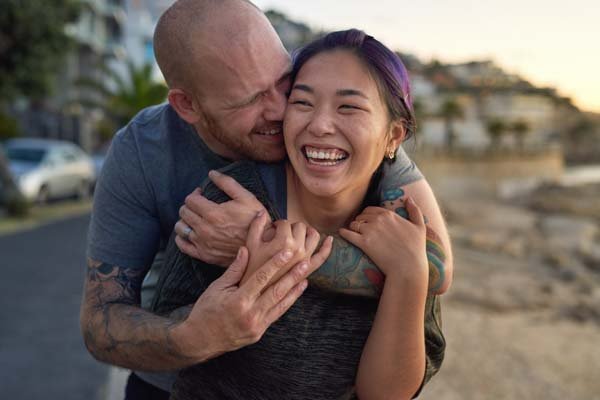
  • Physical touch and affection: Hand-holding, gentle touch, and especially hugs are essential. Studies show that a hug held for 30 seconds can align two people and calm them down.

Ask For Professional Help

Extraordinary times call for extraordinary measures. No one should be expected to handle all of this stress on their own. Couples counseling is an ideal setting for developing the coping mechanisms you need.

In the presence of a skilled, unbiased guide, you and your partner can explore and discover in a safe space. Everyone needs help from time to time. I invite you to reach out to set up a free consultation today.

If you want to know more about how I think of couples and relationships, come visit my couples and marriage counseling page. If you are in Minnesota, I’m here to help. Contact me, let’s talk, and let’s get you both on the same page again. You can call at 612.230.7171, email me through my contact page, or click on the orange button to self-schedule a free, 15-minute phone call.


Is Poor Self-Esteem Affecting Your Relationship?

For example, poor self-esteem can have a profound effect on your relationship. When you feel insecure, it changes how you interact with your partner. It may also change how you see your partner. Self-esteem issues can cause black-and-white thinking—about yourself and about your significant other. It’s important to recognize when this is happening.

What's The Story In Your Head?

Every couple experiences times where either or both people “make up a story in their heads.” One of the most beneficial things is to let your spouse or partner know the thoughts you struggle with AND let them know you’re also probably “full of crap.” This means that you let them in on your struggle, but also let them know that you KNOW you made this up.

Am I Commitment-phobic?

Just because you avoid being in a long-term relationship doesn’t mean you have a fear of commitment. But it might. You may fear commitment and not even realize it.

That depends on a lot of factors, including how you define “commitment.” For the purposes of this post, we stick with a basic meaning. To commit to something is to dedicate yourself to it for a long time.

Are You Sabotaging Your Relationship?

If your relationship is not going well, it’s normal to wonder why. The possibility exists that you are sabotaging things. I know, that’s hard to accept. But it’s also very hard to recognize. The underlying issues might seem invisible at the moment.

The best way to tell if you’re sabotaging your own relationship is if you’re behaving disproportionately to what’s happening to you. This often occurs because you’re either afraid of something or hurt about something. Anger often pops up to protect you in such moments. In response to that anger, people will either shut down, go away, or get big (raise voice, criticize, etc).

Defining “Sabotage”

I’m not talking about someone being cruel, mean, or abusive in the name of ending a relationship. The sabotage discussed here is far more subtle and far less intentional. You meet someone. There’s chemistry. All is going smoothly and then, without explanation, you grow distant—despite wanting this relationship to work.

Similar types of behavior can happen at any point in your relationship or marriage. The bottom line is that you cause friction where none existed. The most powerful steps you can take to avoid this trap are:

  • Knowing why people sabotage their relationship

  • Recognize the signs that you’re engaging in such sabotage

Why Do People Sabotage Their Relationships?

In each case, there will be unique factors at play. There is no way to predict and/or discuss all the possible variables. However, there is one major cause that demands your attention. Your attachment style dramatically influences all of your relationships—lovers, friends, family, co-workers, etc.

Your attachment style is created in your earliest years. How your parents and caregivers treat you shapes either a secure or insecure attachment in you. Secure is obvious. In the realm of insecurity, your style may be avoidant, anxious, preoccupied, etc.

You may have been cared for by inconsistent parents. Then again, you may have endured childhood trauma. All across the scope of “insecure,” there are reasons you stop replying to texts, cancel plans, etc. as an adult. We’ll return to this in the final section below.

How Can You Tell If You’re Sabotaging Your Own Relationship?

  • Withholding Sex: This means more than just the occasional “dry spell.”

  • Avoiding Conversations About Negative Emotions: Do these discussions make you uncomfortable or angry?

  • Focusing on Your Partner’s Perceived Faults: It’s a red flag if you are criticizing your spouse or partner all the time.

  • Anger: As mentioned up top, you may display reactions out of proportion to the situation.

  • Setting Unrealistic Expectations: One way to make certain your relationship lets you down is to expect your partner to be a superhero.

  • Breaking Promises: It could seem “minor” (like being late or skipping a chore) but they add up.

  • Passive-Aggressive Behavior: Look out for the silent treatment.

How to Stop Sabotaging Your Own Relationships

To repeat, there is a good chance your attachment style is a major factor. For that matter, your partner’s attachment style is likely an issue, too. Identifying these styles is paramount. You can work on that alone or together. Perhaps best of all, you can do this work in the presence of an experienced therapist.

Agreeing to try counseling together is a giant step toward change. You are showing a desire to learn, grow, and heal. A mediator can really help in identifying the root causes of the problem. I’d love to guide you through this process.

If the above sounded familiar in any way, we should talk. Soon. Let’s set up a free consultation and get both of you on the road to recovery. You’re better than this, and your relationship can be too.

If you want to know more about how I think of couples and relationships, come visit my couples and marriage counseling page. If you are in Minnesota, I’m here to help. Contact me, let’s talk, and let’s get you both on the same page again. You can call at 612.230.7171, email me through my contact page, or click on the orange button to self-schedule a free, 15-minute phone call.

Should You Attend Couples Counseling When Planning for Retirement?

What is your retirement vision? For some, it’s relaxation, a reduction in responsibilities, connecting more with grandchildren. For others, it can be a major life stressor. Think about it: your job role is changing, your family role is changing, and perhaps expectations of you are changing. Do you know what all those entail? So, how do you prepare for such a major life change?

Why Sleeping Apart Can Be Good

There’s an idea that if you’re sleeping apart, there’s something wrong with your relationship. As with just about everything in life, things are never that simple. . . But if something is getting in the way of sex, just know that 70-80% of my couples sex problems stem from a misunderstanding. You may be experiencing a partner with lower sexual interest than you and assume that it’s because you’re not as attractive as you once were. In fact, that’s often not the case.