

It may seem odd to use the word “healthy” to describe any conflict, but this can be a crucial component of any relationship. Contrary to popular opinion—and pop culture—some degree of conflict is normal between partners. It is inevitable and has the potential to be quite helpful. I like what Terrence Real says about the process of marriage: Every relationship is an endless dance of harmony, disharmony, and repair.
4 Ways To Be a Better Partner

Why did you click on the headline of this post? I can safely assume it has something to do with your desire to improve and enhance your relationship. After all, who doesn’t want to be a better partner? The tricky part is defining what you mean by “better.” Relationships are complex bonds with so many moving parts. How exactly does one get better at this?
Of course, there is no single way to address this goal. But that doesn’t mean there aren’t some universal concepts to consider. So, let’s explore those concepts before we get to the list!
What Makes a Good Partner?

Again, this can be very much in the eye of the beholder. That said, here are a few ingredients to consider:
Positive energy
Self-awareness
Gratitude
Compassion
This is not to say you can never screw up or have a bad day. The goal instead is to find attributes that can guide you when things aren’t going smoothly. The four listed here are a good start. People want to be around others who can find a positive spin. They value humility and they want to feel appreciated.
Perhaps most of all, we all need to know that our own transgressions will be met with empathy and compassion. How then can you embody these ingredients on a daily basis?
4 Ways You Can Be a Better Partner
1. Commit to Healthy Communication
This will be your foundation. Through good times and bad, you and your partner will need to communicate in a healthy manner. Productive communication combines so many positive traits. You learn to listen, validate, trust, retain, and resolve conflict.
Ideally, your communication as a couple happens in real-time and in person. Don’t leave things to chance with texts or social media messages. Prioritize each other by being fully present for the conversations that shape your lives.
2. Accept Change
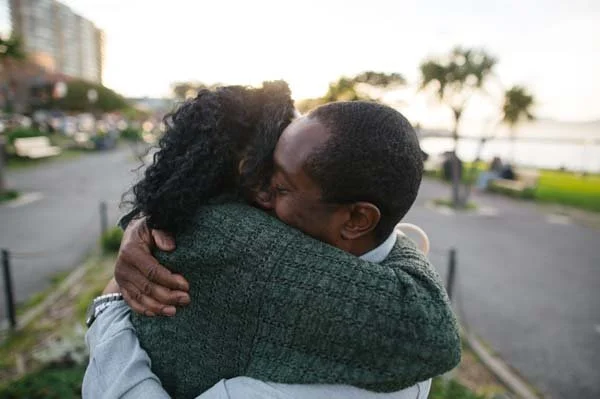
It’s tempting to reach a happy point where you wish everything could just stay precisely as is. Not only is this impossible, but it also is not as appealing as it seems. Change is what keeps every relationship strong and fresh.
No two people stay exactly the same and, believe me, that’s a good thing. Embracing this reality is one way to help your connection evolve and grow over time.
3. Be Vulnerable
For a relationship to thrive, both partners must be willing to open up. They must be willing to trust. This can be scary stuff, but it’s like glue when it comes to your bond.
Both partners need to see their relationship as a safe space. They need to feel that they can let their guard down and be vulnerable. Such openness invites the spouses to communicate more openly and roll with the inevitable changes.
4. Take Care of Yourself
Self-love is a powerful practice. It can help create the above-mentioned self-awareness. Some portrayals of a happy couple involve what appears to be martyrdom for each other. This couldn’t be further from the truth.
You are two discrete individuals who are also part of a couple. Therefore, it is non-negotiable that you practice self-care. This could mean:
Literal self-care safeguarding your health through daily choices
The setting, enforcing, and respecting of boundaries
Cultivating an independent life with your own interests, beliefs, and social life
Celebrating your strengths while working on what needs improvement
How To Start
Sure, There are these 4 ways you can improve as a partner. But how do you start? Here’s the TLDR: focus. There seems to be so much, it can be hard to start. I tell clients to start the day with intention. Pick one thing you want to get better at today. Then focus on that this morning. Then rinse and repeat.
It Helps to Have an Unbiased Guide
What if you think you’re doing fine but your partner disagrees? Or the reverse? Couples counseling puts you in the position to have your interactions witnessed and analyzed. Your weekly sessions serve as opportunities to better understand each other and thus, yourselves as partners.
If you want to learn more about how I think of couples counseling, stop by my marriage and couples counseling page. If you are in Minnesota and want to understand how you can let go of an unhealthy relationship, let’s talk soon. I’m in Edina and serve the greater Minneapolis area. You can reach me by phone: 612-230-7171 or email through my contact page. Or you can click on the button below and self-schedule a time to talk by phone or video.
How Often Do Couples Fight in Healthy Relationships?
How To Keep Your Relationship Conflict Healthy
We’re conditioned, after all, to see conflict as a crisis—particularly in a relationship. Therefore, let’s begin by accepting an unpopular fact. Conflict is inevitable. No two people agree on everything, and this is okay. It’s normal. A couple that says it never fights is almost certainly avoiding confrontation.
Emotional Infidelity: What Is It?
The Unique Challenges of a Bicultural Marriage
Laws banning “interracial marriages” were only declared unconstitutional in the US in 1967 in the Loving vs. Virginia case. Within a half-century, it has grown to 15% of all marriages being one of mixed race or ethnicity. Clearly, many old barriers have been knocked down. But this doesn’t mean smooth sailing is guaranteed.
Is It Bad If We Fight In Therapy?

Let’s get something out of the way right off the bat. It’s not uncommon for a couple to fight during therapy. Couples disagree and sometimes, that leads to conflict—regardless of the location. In particular, couples therapy is designed to draw out underlying issues and unspoken truths. So it happens and there’s no reason to feel shame or fear about such a scenario.
The essence of fighting is that both people are attempting to “break through” to the other person or “calm down” the distress in the fight. As one person tries harder to “break through,” the other person tries to “calm down” even more, causing a spiraling pattern. I talk about it in my article on spiraling.
As with all conflict, it could even turn out to have hidden benefits. Too many of us are conditioned to see fighting as the first step toward a break-up. I like to think of it as an opportunity to re-organize. Have you ever seen a road being repaired? There might be some “deconstruction” in the initial phases as the workers prepare the surface for a new concrete or asphalt segment. It looks a mess, but it’s a necessary part of reorganizing and making something better.
Learning What To Do With Anger
Tensions are running high and the stakes feel even higher. Both partners want to be heard and validated and reassured. This is often because both of you “see” the other person as the enemy. This is because there’s an injury for both of you. Maybe you’re seeing your spouse or partner shut down. That can feel like they’re giving you the silent treatment. Maybe you’re seeing your spouse get really loud. That can feel threatening. As one example, these both can be a result of overwhelm.
Fortunately, there is no better environment for this kind of resentment to surface. You may be fighting with your spouse or you may feel like they’re picking a fight with you. In either case, you are in the presence of someone specifically trained to handle contentiousness. As mentioned above, you will quite likely end up learning a whole lot from the experience.

What to Keep in Mind If You Fight During Couples Therapy
Very few people want to fight. Even fewer want to be involved in a confrontation that involves raised voices, accusations, and worse. Fighting in front of your therapist, however, can be the ideal way to make progress and develop skills. To follow, I’ll offer just some of the potential benefits and lessons available to you:
The Importance of Taking a Break
If you and your partner have slid into a cycle of fighting, it can feel like the argument never ends. Part of this is because no breaks are taken. Everyone needs a “time-out” every now and then. Stepping away to cool down and regroup reduces the odds of a disagreement trying into a battle.
When the conflict happens in a session, it is a golden opportunity to examine:
The patterns each of you fall into
How the fight makes you feel
Listening skills
Body language
Word choices
Conflict De-Escalation
In your sessions, all three of you can speak theoretically about conflict resolution. When a fight happens, all that theory must be translated into practice. Here is some tools I help clients use:
Using Terry Real’s Method of the Feedback Wheel.
The Importance of cooling off and how to do it.
Without an unbiased mediator, it can be tricky to see past the emotions. Within the context of a couples therapy session, such analyses flows more naturally.

Giving Your Therapist a Closer Look
As the first two benefits and lessons highlight, this scenario gives your therapist a window into your relationship. This is not to say you should pick a fight in therapy.
However, if that happens, it can assist the counselor in offering more valuable input. This turns a negative moment into something positive.
Your Therapist is Not Judging You or Taking Sides
When I witness a couple fighting in a session, I’m not looking to assign blame. I’m carefully watching as your dynamics play out in the heat of the moment. Again, you need not feel shame.
Partners inevitably clash and this is not automatically a bad omen. Fighting in therapy is a chance to better understand what you argue about and how you fight. It also provides a glimpse into the state of your conflict resolution skills.
Therapy is a Workshop
During your sessions, you can let down your guard and take some chances. This is often the path toward progress and repair. I invite you to take the first step on this important journey. If you want to learn more about how I think of couples counseling, stop by my marriage and couples counseling page. If you are in Minnesota and want to learn skills to reach these types of goals, let’s talk soon. I’m in Edina and serve the greater Minneapolis area. You can reach me by phone: 612-230-7171 or email through my contact page. Or you can click on the button below and self-schedule a time to talk by phone or video.
Some Conflict Can Be Healthy—Here’s How to Know When It’s Constructive
Conflict has a bad reputation. Sure, it’s earned some of it, but things are more complex than that. Disagreement is a normal part of life. Within the context of a relationship, conflict is inevitable. Whether it is healthy depends on a broad range of factors. The short version goes like this: If you and your partner handle conflict in a healthy way, the entire experience can be healthy.
Is Taking a Break a Death Sentence For Your Marriage or Relationship?
10 Habits to Break for a Healthy Relationship
It's Hard to Let Go of an Unhealthy Relationship

We get into a relationship. Things begin to palpably turn sour. But we stay. We know it’s not good. People in our life warn us. But we stay. It’s one of the strangest paradoxes in human behavior. We all know someone who has been in this situation. That “someone” might even be us.
Why is it so hard to let go of an unhealthy relationship?
Needless to say, everyone’s situation is different. If you have reasons for staying in your relationship and it continues to be an unhealthy dynamic, get help. Not everyone can change out a blown head gasket in a car engine. Same with relationships.
When things are bad, getting professional help can change the trajectory of your relationship. But if you’ve tried getting help and things are still not resolving, your partner isn’t accepting responsibility. This piece is about what gets in the way of finally “calling it.”
Fear of Being Alone

This factor deserves its own section. I’ve spoken to countless people who later felt they “stayed too long.” Loneliness is a frequent and important factor. Being alone can feel unacceptable for a variety of reasons, e.g.
You measure self-worth by your relationship status
Social media culture makes you feel abnormal if you’re single
All your friends are in a relationship
You identify so strongly with being partnered that you genuinely don’t know who you are as a single person
Then, of course, is a simple fact that you sometimes (or often) feel lonely. This can create a “better than nothing” perspective on your current relationship. The fear of being alone overwhelms your feelings of unhappiness and being stuck. Then, there are fears that developed long before you realized what was happening.
As a young child, you may have developed an anxious attachment. An unreliable caregiver (usually a parent) did not or could not meet your needs. This creates an attachment style that follows you in adulthood. You unconsciously seek out incompatible partners and attempt to repair the scars from your youth. Being alone, in your mind, is simply not an option.
4 More Reasons Why Is It So Hard to Let Go of an Unhealthy Relationship
1. “I stayed this long.”

There’s the concept of “sunk-loss.” As time passes, you commit a fair amount of energy to your partnership. Why quit now, you wonder. Sticking around and trying to “figure things out” appears to be far more palatable than starting again from scratch.
2. “I can change them.”
It’s the eternal hope that your partner will change and everything will improve. Such a mindset makes it harder for you to recognize red flags. You’re too busy fantasizing about great things will be once your partner has transformed into your ideal image of them.
3. “I can fix this.”
Some people thrive as “fixers.” Your relationship is crumbling around you, but you see it as a challenge. You’re not a quitter and, perhaps, you’d be mortified to fail so publicly. You do more and more and more. Nothing changes, but you believe it’s only because you just haven’t found the secret formula.
4. “What if I’m wrong?”
An emotionally abusive partner will manipulate you into not believing your own eyes. When you are being gaslighted like that, you begin to doubt yourself. When friends point out issues, you vehemently defend your partner. You may go as far as seeing yourself as the reason why the relationship is a disaster.
How Couples Counseling Can Help
Working with a skilled, unbiased guide is an excellent choice in a situation like this. You can learn invaluable skills like:
Setting boundaries
Prioritizing yourself
Processing grief and loss
Reinventing your attachment style
As you work on yourself, you can directly address that primal fear of being alone. You can find new perspectives, new patterns, and new approaches. You’re not doomed to an endless cycle of toxic, unfulfilling bonds. Let’s connect to talk more about the possibilities.
If you want to learn more about how I think of couples counseling, swing by my marriage and couples counseling page. If you are in Minnesota and want to understand how you can let go of an unhealthy relationship, let’s talk soon. I’m in Edina and serve the greater Minneapolis area. You can reach me by phone: 612-230-7171 or email through my contact page. Or you can click on the button below and self-schedule a time to talk by phone or video.
Intimacy Is More Than Sex. . . But That Matters Too
The best definition I know for Intimacy is: connection. If you feel connected through a process with your partner, that’s a form of intimacy. Couples who go for walks together, shop for antiques together, watch a movie together, generate an emotional connection with the other person. They are having a common emotional intimacy, or connection with the other person. There are differen
5 Ways Mindfulness Can Benefit Your Relationship
For example, one of the top things that people in relationships want is accessibility, responsiveness, and engagement. I talk more about this in my piece on What Everyone Wants From Their Partner. Doing all of these three things in your relationship is an inherently mindful way of being in relationship. Here are 5 other ways of thinking about the benefits of being mindful in your relationship.
Stop Keeping Score In Your Marriage!
Self-Esteem and Relationships
The One Concept Couples Miss

Here’s the TLDR: Stop thinking about what you or your partner can do individually in your relationship and start thinking about what both of you can do together.
When you were dating your spouse or partner, did you think in terms of “matching?” Did you compare your vinyl record collection? Did you talk about your love of Oscar Wilde or William Butler Yeats? When you’re dating, you can be obsessed with “the right match.” It is so common to have the mentality that “I just need to find someone with enough commonality that it works.” But it’s dangerous to keep using this concept as the thing that binds you.
If you forget the “us,” you can only think in me or them. You miss the team. You can think,”I wish she would talk to me when she’s angry,” or ,“If only I could do something different instead of freeze when she complains.”
Both of these approaches recognize the role of the individuals, but don’t recognize the impact of the relationship in changing the way you two relate. It fails to recognize that even if you’re trying to do something different for the relationship, you can enlist the help of your partner to do it.
Stronger United
To understand the power of “Us,” let’s understand when you’re thinking me/them vs. me/them/us
What do you say to yourself when you’re in a you, me mentality?

When you only think about you/me
She needs to stop badgering me so much.
If only I could just not get so angry when she says,”You’re out of line!”
Why can’t I say anything when we’re fighting?
What do you say to yourself when you’re thinking you, me, us?

You/Me/Us: Enlisting the help of your relationship allows you to do much more.
I really want to hear you, but I’m getting overwelmed. I want to slow this conversation down because I want to hear you.
I’m triggered right now because of what you just said. I need some time to calm down.
I’m “stuck” in my head. I need to go for a run, then maybe we can check in?
This Is Enlistment
In each of these examples, you’re shifting from what individuals could do into asking the other person for help. Both of you have a chance to “team up” in overcoming a dynamic that both of you are experiencing. It means digging in deep to tell the other person a more vulnerable thing - that you’re overwelmed, that you want to hear them, or that you’re stuck.
The benefit to this enlistment isn’t just extricating yourself out of one dynamic - it’s an increase in trust, because that person was able to respond to you. They are showing that they’re responsive and engaged, two of the three things people in relationship want most from their partner.
Asking for Help
If you’re needing help in being more of a team and operating from a “we” rather from a you or me, I’m here to help. You can look at my Couples and Marriage Counseling page. If you’re in Minnesota and want help working through your arguments, you can contact me at 612.230.7171 or email me through my contact page, or click the button below to self-schedule a free, 15-minute consultation.
A.R.E. You Accessible, Responsive and Engaged?
Are You Too Young Or Too Old For Couples Therapy?
Your commitment might be “too young” for you to put in the energy to repair the relationship. You might be “too set” in your ways (too old). . . But if the relationship is important enough to you, and you’re willing to see that some things must change when you have two people in a household, couples therapy might be just what you need.
Are Complaints Killing Your Relationship?
If you’re unhappy with how things are going in your relationship, aren’t you supposed to complain? Isn’t that sharing your feelings. Yes and no. Sharing your primary feelings like loneliness, fear, hurt, joy, and sadness can be productive. Sharing secondary emotions (even through non-verbals) like frustration, irritation, annoyance, anger, and rage can be really confusing and unproductive. Complaints can be the start of a fight, and that’s not productive.
Reversing Emotional Distance

Even soul mates can have rough patches. You’re a couple, of course. But you are simultaneously two individuals. This means two different sets of needs, wants, values, dreams, goals, thoughts, ideas, emotions, and backstories. It is inevitable that some incompatibilities will arise.
The problem is not always the incompatibility. Issues can emerge based on how you each handle your differences and disagreements. Differences in communication can create emotional distance in your relationship. Fights happen but the root causes are ignored.
Left unchecked, emotional distance has the potential to drive a wedge between partners. Therefore, you must recognize the signs and find new approaches.
Some General Signs of Emotional Distance
Apathy towards intimacy and physical affection
Withdrawing from interactions
Not responding to your partner’s emotions
Not showing any engagement when a conflict arises
Showing anger for no apparent reason, picking fights
Being distracted
Not sharing about yourself or your feelings
Showing no interest in making plans or working on the relationship
Ask Yourself These 3 Questions:

I encourage people to think about how they themselves are acting. EFT, a method of couples therapy I use, has a 3-letter acronym: A.R.E. You can use this as a shortcut by asking am I:
Accessible -Am I actually available? Or are meetings always taking precedence over my partner’s needs? Can my spouse reach me even when I’m distressed?
Responsive - This is a bit harder. When they do access me, can I give back? Can I show that I hear and see them?
Engaged - Can I demonstrate in my conversations that they are important to me? Engagement means “am I actually giving appropriate attention to them?”
So, you can learn to recognize distance when you see it. Now what? How do you close the gap?
What to Do When You Sense Emotional Distance in Your Relationship

Identify and Address Unmet Needs
Each of us has needs—as an individual and as part of a couple. This gets tricky when we don’t feel comfortable talking about it. This creates distance when we’re not even in touch with our unmet needs. Another obstacle is that we may be assuming that our partner’s emotional needs (and love language) are the same as ours.
Your differences are valuable and enrich your bond. But they must be identified and honored in order to avoid emotional distance. Couples need to communicate openly, frequently, and directly. Difficult conversations can lead to crucial breakthroughs.
If one or both of you is struggling with these discussions, couples counseling can be a valuable tool (see below).
Pull in the “we” Instead of Just “You” or “Me”
A big misunderstanding that a lot of couples have when they first come into therapy is the importance of the week. Couples are often thinking about what can I do to make things better or what is the other person doing that makes things worse. While that can be important, the most important thing is how you enlist the help of your partner or spouse to solve a problem between you two. The act of enlistment not only solves the problem you're asking them to help you with, it flexes muscles in your relationship that helps you do the relationship better next time. It is a meta-conversation. It leads to lasting change between you two.
Cultivate Independent Lives
Pop culture may give us the impression that happy couples are always together. On the contrary, your solo time is a major part of a healthy connection. Wanting to be on your own does not automatically mean you don’t enjoy spending time with your partner. It’s just that being together all the time can lead to conflict. Everyone needs solo time. How much solo time each of needs is different. Again, communication is the avenue by which you can bridge such gaps.
Yes, an introvert and an extrovert can make beautiful music together. But… this requires you to check-in regularly to make sure both of you are getting what you need. If you sense some distance developing, talk about scheduling in some alone time.
Stress Management and Self-Care
The outside world has a way of impacting your relationship. The events of the past two years, in particular, are enough to strain even the strongest bond. Stress is sneaky. It creeps up on you and makes you feel like crap. But you don’t instantly identify it as the cause. In fact, you may instead blame your partner or relationship.
All of this adds up to an essential need to practice self-care. The more resilient you are against stress, the less it can affect you and your significant other. Make healthy eating choices. Get some exercise every day. Maintain steady sleep patterns. Learn some relaxation techniques. Taking these steps, as a couple, is further protection against emotional distance.
Therapy Can Help
I mentioned it above. Couple counseling is a proven path toward addressing and/or avoiding emotional distance. I’ve worked with countless couples who have struggled with emotional distance. I can help you, too. Let’s talk soon and get the process started.
To learn more about how I think about couples in general, check out my marriage and couples counseling page. If you’re in Minnesota, I’m here to help. Contact me, let’s talk, and let’s get you both on the same page again. You can call at 612.230.7171, email me through my contact page, or click on the orange button to self-schedule a free, 15-minute phone call.